
SPOTLIGHT ON... Andrea Hartenfeller - organ enthusiast and diversity advocate

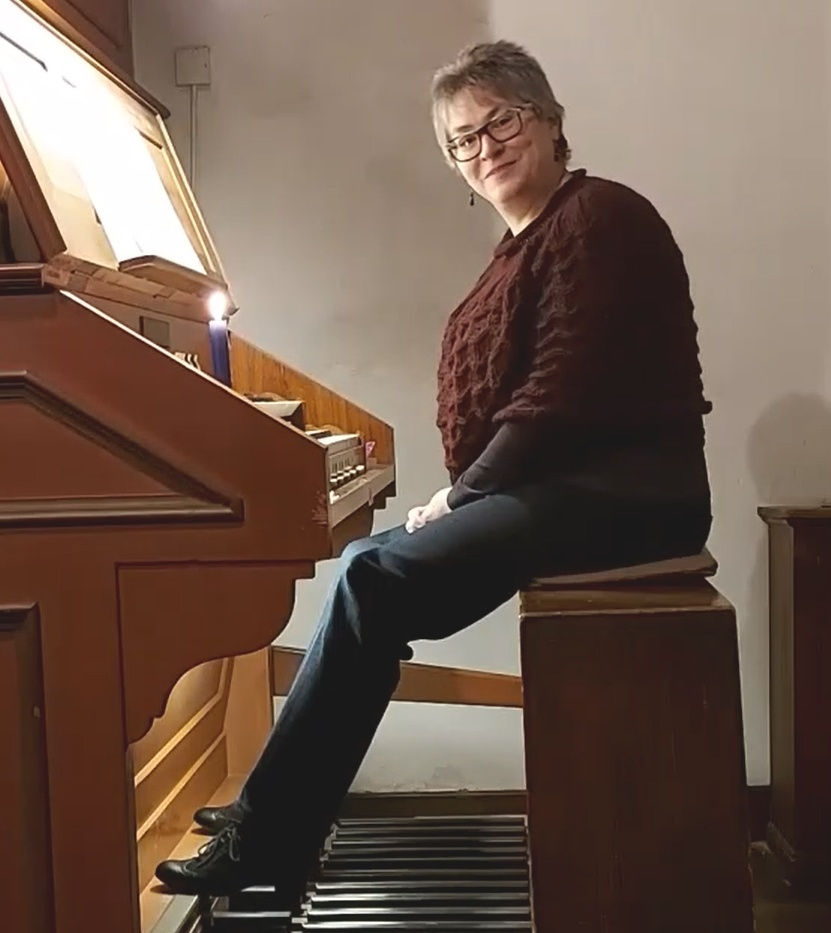
SWO members have greatly appreciated your perspectives as a German musician, especially as you are on the board of Arbeitskreis Frau und Musik (Archive of Women in Music). How does that Archive compare with SWO’s Directory of Women Composers?
The Archive was founded in 1979 and is the largest of its kind in the world. It has more than 32.000 media units by and about 2.000 women composers and conductors, including manuscripts, sheet music, letters, books, sound recordings and digital assets. Whereas the wonderful SWO directory focuses on choral and organ music.
Are you a full-time musician?
Yes, in my heart! But in practice I’m part-time. I am an organist in my own parish and help other local churches; I work with singers and choirs and I teach. Together with my husband, I also run a consulting business focusing on HR and organisation development and information security.
Clearly music is a big part of your life, running alongside your business career. Did you learn music as a child?
I learned the recorder in kindergarten and always loved to sing. I knew before I even started school that I wanted to play the piano, like my mother and grandfather. When I was 8 my grandparents’ piano moved in with us and I started lessons. I continued playing the recorder for fun and when I was 14 I started accordion lessons.
So you sang, and played piano, recorder and accordion. What about the organ?
When I was about 16 our church organist asked if I would play the organ in a Sunday service. He gave me a few lessons that mainly focused on registration and off I went. I regularly played, but piano and accordion remained my main instruments. I briefly toyed with the idea of becoming a church musician but instead decided to follow my passion for teaching. I studied music education, piano and singing at the Hochschule für Künste in Bremen (music and arts college) and earned my diploma.
Most of us find it impossible to keep so many instruments going! Which instrument won?
While I was at Hochschule the organ was not really present. Afterwards I went to England to study music therapy and, when I returned to Germany, music temporarily became a side activity. But in 2014 I was asked to play the organ for a wedding and since then the organ has become my main instrument. I absolutely love playing but I never had regular organ lessons.
Oh! Why not?
To cut a long story short, in the beginning I never thought I would stick to the organ, and later the time never seemed to be right. I learned a lot from working with and listening to colleagues and following their advice, so in a way, I had lessons, but no formal tuition.
Did your studies in music therapy influence the way you think about, and teach, music?
Yes, they definitely contributed to my personal and musical growth. I had already learned how to make music accessible to children and music therapy studies encouraged me to bring these ideas into my work with adults, too. Also, my improvisation skills improved a lot and so did my understanding of relationships and communication in groups.
After I graduated, I found that jobs for music therapists were scarce. I eventually decided to move back to Germany and had my first major career change: I started working as a consultant and later as an HR manager.
Looking back, do you see a continuous thread running through your various professional and musical activities?
I always worked with people, either in a teaching capacity or in my management and consulting roles. My musical taste is broad so I guess the thread, if there is one, has many colours and is influenced by my curiosity and willingness to learn.
Comparing Germany and the UK, do you sense any difference in the attitude to women in church music … and, indeed, in the gender balance in the two countries?
Both countries have some of the same problems. It can be hard for women to reach the highest levels of the profession, e.g. working as church music director. When I look at my part-time colleagues who started playing the organ as a hobby and have other jobs or are carers, there are about 75% women. However, when you want to do a church music training that leads to an exam, the courses on offer aren’t very family friendly; people who have other duties can’t attend.
Editor’s plea to readers: Aware that organists’ courses and jobs could be more family-friendly, SWO has tried to establish a ‘Parents’ Working Group’ but the problem is that parents are too busy to get together, even online. Does anyone have a strategy for addressing this? if you are a SWO member juggling parenting and musicmaking, could you volunteer for this campaign? Contact societyofwomenorganists@gmail.com if so!
Why is your SWO membership important to you? Are their ways in which you feel SWO could increase its relevance and impact?
I love being able to get in touch with colleagues from other countries. I fondly remember my time in the UK and my SWO membership helps to keep memories alive. It’s important that people can experience organ-playing so I want to support SWO’s work and I also want women composers, conductors and musicians to be heard more often. And I like that membership is so easy and hassle-free. Maybe we could emphasise that SWO is open, not only for people who play the organ, but for everyone who is interested. When I speak to people about becoming a SWO member, I often hear “oh, I’m not good enough at the organ yet” or “I’m not a musician”, but we need those voices, too.
Andrea, thank you for all the work you do for SWO and best wishes for your many activities, in both business and music!
Andrea Hartenfeller
Born 1974 in Munich/Germany
Started playing the recorder in the late 1970s. First piano lessons in 1982. Accordion since 1988. Organ since 1990, but no formal tuition.
1992-1994 Composing the music for various plays (fairytales/children’s theatre) for an amateur drama group in Bayreuth and on-stage-pianist for a revue
1994-1998 Hochschule für Künste Bremen/Germany. Studied music education, piano and singing. Diploma as teacher for elementary music education and piano.
1998-1999 Freelance music teacher
1999-2000 University of Surrey Roehampton. Post-graduate diploma in music therapy
2001-2003 Career change: work as executive search consultant in Frankfurt
2003-2006 Early years education specialist at the childcare facility of the European Central Bank in Frankfurt (including training my colleagues in elementary music and doing music projects with the kids). In my spare time I played horn in a marching band.
2004-2007 Part-time distance studies at the Technical University of Kaiserslautern/Germany. Master of Arts in Adult Education.
2006-2017 Full-time work as human resources manager in various companies, including Germany’s largest video games developer.
Since 2013 vocal coach and assistant conductor/pianist in various choirs; since 2022 also leading a choir
Since 2014 part-time organist
Since 2017 regular organ recitals
Since 2018 running my own consulting business
Since 2019 freelance music teacher
2024: member of the extended board of the Arbeitskreis Frau und Musik (Archive of Women in Music)
2025: member of the executive board of the Arbeitskreis Frau und Musik (Archive of Women in Music)
Writing a blog on my musical activities and women composers: aha-musik.de Composing for recorder, organ, piano and other instruments; song-writingRegularly posting videos of organ and other music on my PeerTube channel
Memberships: Orff-Schulwerk-Gesellschaft, British Association of Music Therapy, Internationaler Arbeitskreis Frau und Musik e.V., Society of Women Organists


Comments